
How to Handle Negative Comments as a Creator in 2026
Learn how to categorize, respond to, and manage negative comments on YouTube, TikTok, Instagram, and Facebook without burning out or hurting your community.
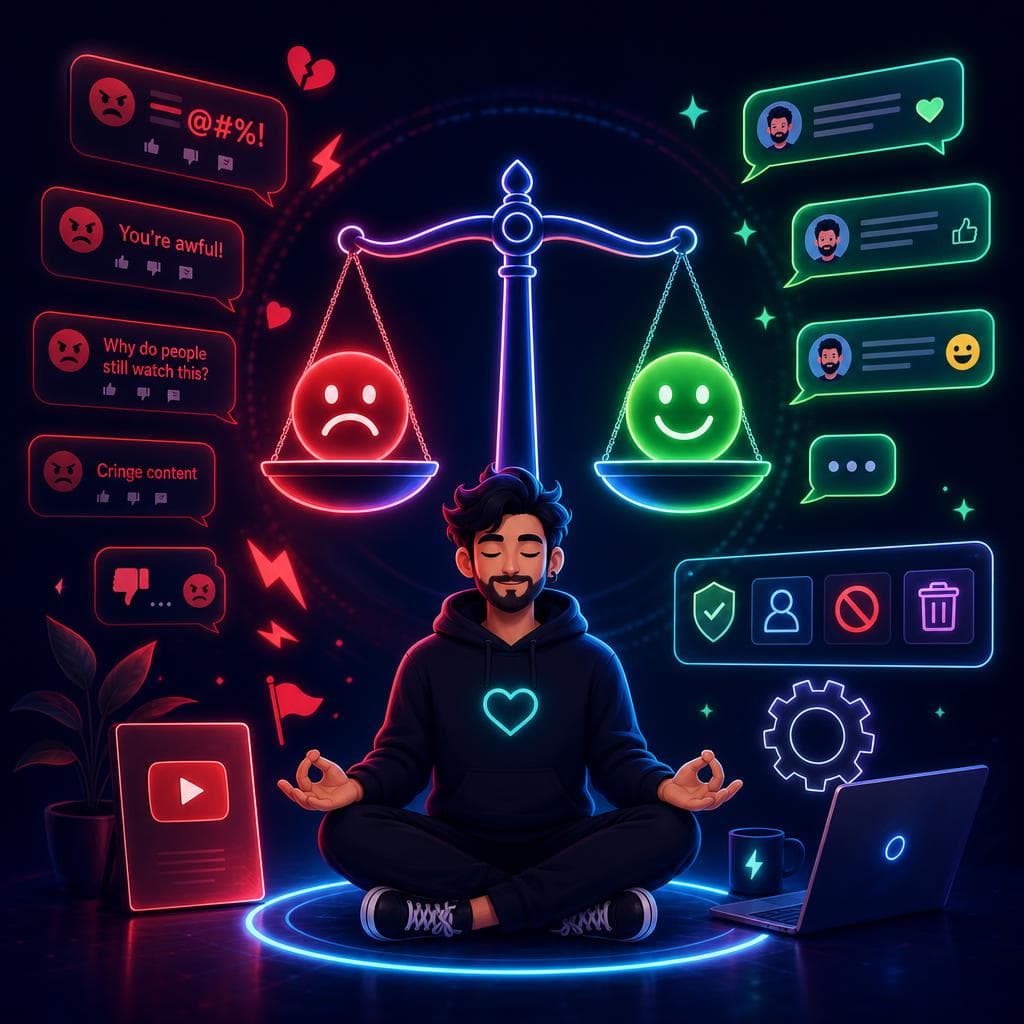
Negative comments are part of being a creator. The mistake most people make is treating all negative comments the same. Some need a reply, some need to be hidden, and some need to be ignored completely.
This guide shows you how to handle negative comments without losing your energy or damaging your community.
Not All Negative Comments Are the Same
The first step is to sort the comment into a category. The right response depends on the type.
1. Harassment, hate, or threats
These include personal attacks, slurs, threats, or repeated targeting. Your job is not to reason with these commenters.
What to do:
- Do not reply
- Hide or delete the comment
- Block the user if needed
- Report threats to the platform
You do not owe a public explanation for removing harassment. Your other viewers will appreciate a cleaner comment section.
2. Misinformation or false claims
Sometimes a comment spreads false information about you, your advice, or a topic in your video.
What to do:
- Reply with a calm correction
- Link to evidence if you have it
- Pin the correction if the false claim is spreading
- Do not get pulled into long arguments
Keep it short and factual. Your audience can see who has the better case.
3. Legitimate complaint
These are negative comments with a real issue behind them. Maybe your advice did not work for them, your product had a defect, or you made a mistake.
What to do:
- Acknowledge the issue
- Apologize if you were wrong
- Offer a specific next step (refund, replacement, updated instructions)
- Move sensitive issues to private messages when needed
A public, honest response to a real complaint builds more trust than a perfect rating.
4. Vague negativity
Comments like "this is trash" or "you are awful" without specifics.
What to do:
- Ask one clarifying question
- If they do not engage, leave it alone
- Do not defend your whole video over a vague insult
These comments are often venting. A genuine question can sometimes turn them into useful feedback.
5. Sensitive issue
These involve personal information, medical claims, legal concerns, or potential doxxing.
What to do:
- Move the conversation offline immediately
- Do not share more details in public
- Report if it violates platform rules
Protect the person involved and yourself by keeping sensitive topics out of the public thread.
A Simple Response Framework
Use this flowchart in your head every time you see a negative comment:
- Is it harassment or a threat? Hide, block, report.
- Is it false information? Correct with facts.
- Is it a real complaint? Acknowledge and offer a fix.
- Is it vague negativity? Ask a question or ignore.
- Is it sensitive? Move offline.
Platform Specific Notes
- TikTok: Reply quickly in the first hour. Use video replies to popular comments to extend reach.
- YouTube: You can take longer to reply. Pin a calm clarification if misinformation spreads.
- Instagram: Comments are fast and public. Reply to complaints in stories to control the message.
- Facebook: Page posts can attract older audiences with different expectations. Be polite and direct.
How to Protect Your Energy
Negative comments hit harder when you are tired. Set boundaries:
- Check comments at set times, not constantly
- Do not read comments right before bed
- Use platform moderation tools to filter common slurs and spam
- Remember that one loud negative comment does not represent your whole audience
Use Sentiment to See the Big Picture
One negative comment can feel huge. A hundred positive comments can feel invisible. That is why it helps to see the overall sentiment of your comment section.
If a video has 5% negative and 95% positive, the issue is probably not the video. If a video has 40% negative, there is a real problem to address.
How Comlyzer Helps
Comlyzer analyzes the sentiment of your comments and flags the priority ones. It separates:
- Complaints that need a response
- Questions that keep coming up
- Spam and bot noise
- Top fans who are engaging positively
Instead of reading every negative comment, you see the ones that matter and the overall mood of your audience.
FAQ
Should I delete negative comments?
Delete harassment, spam, and threats. Do not delete legitimate complaints or respectful disagreement. Deleting real feedback makes your community feel policed.
What if a viewer is just wrong?
Correct misinformation once, calmly. You do not need to convince every person. Your broader audience will see your response.
How fast should I respond?
For complaints, aim for 24 to 48 hours. For misinformation that is spreading, respond sooner. For harassment, remove it immediately.
Can negative comments help me grow?
Yes, if you use them as feedback. Objections, complaints, and gaps show you what your audience needs next. The creators who learn from this feedback grow faster.
Handle Negative Comments Without the Stress
Negative comments do not have to drain you. With a simple framework and the right tool, you can protect your energy and turn feedback into better content.
Sign up with code SUMMER50 and get 50 free credits this summer. Paste your video link into Comlyzer and see the sentiment, priority comments, and content ideas in 30 seconds. No subscription, no hidden fees.